

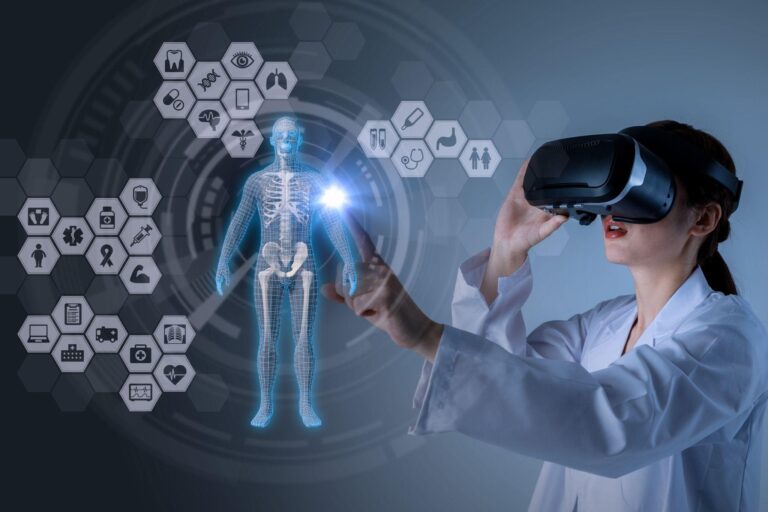
The healthcare industry is undergoing a radical transformation, driven by rapid advancements in medical technology (MedTech). From AI-powered diagnostics to robotic surgeries, innovative solutions are improving patient outcomes, increasing efficiency, and making healthcare more accessible worldwide.
- The Rise of MedTech: A Transformational Shift in Healthcare
MedTech has evolved significantly over the past few decades. Traditional medical devices have now been augmented by AI-driven analytics, connected health solutions, and precision medicine. Several key factors are fueling this transformation:
- Artificial Intelligence & Machine Learning: Enhancing diagnostics, automating administrative tasks, and enabling predictive healthcare.
- Internet of Medical Things (IoMT): Wearables and smart devices improving real-time patient monitoring.
- Blockchain & Data Security: Strengthening patient data protection and interoperability across healthcare systems.
- 3D Printing & Bioprinting: Revolutionizing prosthetics, implants, and even organ regeneration.
- Robotics & Automation: Enhancing precision in surgeries and streamlining hospital operations.
As MedTech continues to evolve, startups are at the forefront of innovation, developing cutting-edge solutions that challenge the status quo in healthcare delivery.
- Key Innovations Shaping the Future of Healthcare
a) AI and Machine Learning in Diagnostics & Treatment
Artificial Intelligence (AI) is playing a pivotal role in early disease detection and personalized treatment plans. AI-powered imaging tools are now outperforming traditional diagnostic methods in detecting conditions like cancer, cardiovascular diseases, and neurological disorders.
For instance, AI-driven algorithms can analyze medical images faster and more accurately than radiologists, leading to earlier detection and improved treatment outcomes. Startups leveraging AI for healthcare analytics are rapidly gaining traction, attracting significant investment from forward-looking venture capital firms.
b) Telemedicine and Remote Patient Monitoring
The COVID-19 pandemic accelerated the adoption of telemedicine, making virtual consultations and remote monitoring a mainstream part of healthcare. IoT-enabled wearable devices now allow healthcare providers to track patient vitals in real-time, reducing the need for in-person visits and improving chronic disease management.
Innovations like smartwatches that monitor heart rhythms and glucose levels are empowering patients to take control of their health while enabling doctors to intervene early when anomalies are detected. As connectivity improves, telehealth is set to become even more sophisticated and widespread.
c) Robotics and Automation in Surgery
Surgical robotics is revolutionizing minimally invasive procedures, enhancing precision, and reducing recovery time. Systems like the da Vinci Surgical System allow surgeons to perform highly complex procedures with unparalleled accuracy.
Robotic-assisted surgeries reduce surgical risks, minimize incisions, and improve patient recovery rates. As the technology advances, robotic systems will become more accessible, transforming surgery across various medical disciplines.
d) Personalized Medicine & Genomics
The future of healthcare lies in tailored treatments based on an individual’s genetic makeup. Advances in genomics and bioinformatics are making personalized medicine a reality, improving drug efficacy and reducing adverse reactions.
AI-driven drug discovery platforms are accelerating the development of new treatments, enabling pharmaceutical companies to bring new drugs to market faster and at lower costs. Precision medicine will continue to redefine treatment strategies, shifting healthcare towards a more preventive and patient-centric approach.
e) Blockchain in Healthcare Data Security
With the increasing digitization of healthcare records, data security has become a major concern. Blockchain technology offers a secure and decentralized way to store and share medical records, ensuring data integrity and protecting patient privacy.
Blockchain is also improving supply chain transparency, particularly in pharmaceutical distribution, reducing fraud and ensuring drug authenticity. As regulatory bodies push for enhanced data security, blockchain adoption in healthcare is set to rise.
- Challenges in MedTech Innovation
Despite its promising advancements, the MedTech industry faces several challenges:
- Regulatory Compliance: Strict regulations and lengthy approval processes can delay innovation.
- High Development Costs: R&D and clinical trials require substantial investment before commercialization.
- Integration with Legacy Systems: Many hospitals still operate on outdated infrastructure, making it difficult to adopt new technologies.
- Data Privacy Concerns: Ensuring compliance with global data protection regulations like GDPR and HIPAA is critical for success.
Overcoming these challenges requires strategic funding, industry collaboration, and regulatory innovation areas where investment firms play a crucial role.
- The Role of Investment in MedTech Growth
Funding is the lifeblood of MedTech startups. Early-stage investment enables groundbreaking ideas to move from concept to commercialization. However, financial backing alone is not enough—strategic guidance, mentorship, and industry connections are just as important.
Investment firms specialize in seed and angel investments, supporting MedTech founders who are pushing the boundaries of healthcare innovation. Some key approaches include:
- Providing capital to scale breakthrough technologies.
- Offering mentorship from industry experts.
- Connecting startups with healthcare providers, regulators, and key stakeholders.
Several MedTech startups have successfully scaled their innovations with the right investment support. By fostering an ecosystem of innovation, we aim to accelerate the future of healthcare.
- What’s Next? Future Trends in MedTech
The next decade will bring even more groundbreaking advancements in MedTech:
- AI-driven drug discovery will speed up the development of new pharmaceuticals.
- Quantum computing will enhance complex simulations for personalized medicine.
- Bioelectronics & neurotechnology will improve treatments for neurological disorders.
- Smart implants will provide real-time health monitoring and drug delivery.
- Preventive healthcare models will replace reactive approaches, improving longevity and quality of life.
The future of healthcare is proactive, personalized, and technology-driven, with MedTech at its core.
Conclusion
MedTech innovation is reshaping the healthcare landscape, offering better patient outcomes, improved efficiency, and enhanced accessibility. However, bringing these technologies to market requires visionary founders, supportive investors, and a collaborative ecosystem.